Is one night of home sleep testing enough to diagnose sleep apnea?

One night can be enough. The AASM guideline describes a single home sleep apnea test (HSAT) recording as conducted over at least one night, but breathing during sleep varies from night to night, and that variability can make tests disagree. Recording several nights in the initial study adds data, while a negative or inconclusive HSAT still calls for polysomnography.1
What do AASM guidelines say about the number of nights?
The 2017 American Academy of Sleep Medicine (AASM) clinical practice guideline sets one night as the minimum. It states, "A single HSAT recording is conducted over at least one night."1 A technically adequate diagnostic test includes at least 4 hours of technically adequate oximetry and flow data, obtained during a recording attempt that encompasses the habitual sleep period.1
The guideline recommends PSG, or HSAT with a technically adequate device, for diagnosing OSA in uncomplicated adults with signs and symptoms that indicate an increased risk of moderate to severe OSA.1 It pairs that with a good practice statement that diagnostic testing should be performed in conjunction with a comprehensive sleep evaluation and adequate follow-up.1
The guideline also addresses why results can differ between tests. It notes that discordance between HSAT and PSG can come from night-to-night variability and from inconsistent definitions of respiratory events, such as hypopneas.1
What does multi-night research show?
In a large multi-night study that used an under-mattress sensor, single-night results misclassified some people, and the error fell as more nights were recorded.2 Lechat and colleagues analyzed in-home nightly monitoring in 67,278 individuals aged 18 to 90, over an average of approximately 170 nights per participant.2
The participants were a large, global, nonrandomly selected community sample drawn from a consumer database of people who purchased an under-mattress sleep analyzer, which the authors describe as validated.2 OSA was defined as a nightly mean AHI of more than 15 events per hour.2
The abstract reports two distinct findings on misclassification. First, "The likelihood of misdiagnosis in people with OSA based on a single night ranged between approximately 20% and 50%."2 Second, the authors conclude that "approximately 20% of people diagnosed with a single-night study may be misclassified."2
Misdiagnosis error rates decreased with more monitoring nights and remained stable after 14 nights of monitoring.2 These figures come from an under-mattress sensor in a consumer sample, with no PSG or HSAT, so they describe that cohort and its AHI definition and should not be read as an error rate for any HSAT device.
When does a single night look borderline?
A single night looks borderline when a modest change in the data could move the patient into a different category or change the clinical decision. Situations that can raise this question include:
- An REI or AHI that sits close to one of the severity cutoffs used at initial diagnosis.3
- A recording with little more than the minimum amount of technically adequate oximetry and flow data.1
- A result whose category depends on which hypopnea definition is applied, since the AHI may be considerably different depending on the definition used.1
- A long period of wake within the recording, which can lower an index calculated over recording time instead of sleep time.1
- A night the patient describes as unusual compared with their typical sleep.
These are judgment calls for the interpreting physician. The AASM position statement says raw HSAT data must be reviewed and interpreted by a physician who is board-certified in sleep medicine or overseen by one, and that diagnosis and treatment decisions must not be based solely on automatically scored data.4
Is multi-night recording the same as repeating a negative test?
No. Multi-night recording planned at the time of the order is part of a single initial HSAT, while a repeat HSAT is a second test ordered after the first comes back negative, inconclusive or technically inadequate.1
The guideline addresses the second situation directly. It states, "Performing a repeat HSAT is not recommended when an initial test is negative, inconclusive or technically inadequate, due to the higher likelihood that a second test will also be negative, inconclusive or technically inadequate."1 Its strong recommendation is that polysomnography be performed instead.1
The guideline also notes that HSAT is less sensitive than PSG in detection of OSA and that a false negative test could result in harm to the patient due to denial of a beneficial therapy.1 Because the guideline describes a single HSAT as conducted over at least one night, this recommendation reads as applying to a multi-night HSAT too, so a negative, inconclusive or technically inadequate multi-night study still points to PSG.1
Patient selection is a separate question from night count. The guideline recommends PSG rather than HSAT for patients with significant cardiorespiratory disease, potential respiratory muscle weakness due to neuromuscular condition, awake hypoventilation or suspicion of sleep related hypoventilation, chronic opioid medication use, history of stroke or severe insomnia.1 See which patients are good candidates for a home sleep apnea test and, for the patient-facing pathway, what happens after a negative home sleep test.
Can home sleep testing be used to follow treatment?
Yes. The AASM position statement describes an HSAT as a medical assessment that must be ordered by a medical provider to diagnose OSA or evaluate treatment efficacy.4 It adds that assessment of treatment efficacy and treatment decisions must not be based solely on automatically scored HSAT data.4 This is a different situation from repeating a negative diagnostic test.
When a follow-up study is compared with a baseline, the two factors the guideline links to discordance between tests are relevant again: night-to-night variability and the hypopnea definition.1 Because the AHI may be considerably different depending on whether the 3% (or arousal) rule or the 4% rule is applied, comparing studies scored under the same definition makes a trend easier to interpret.1 Our article on the 3% and 4% hypopnea rules covers the scoring differences.
How does Wesper support multi-night testing?
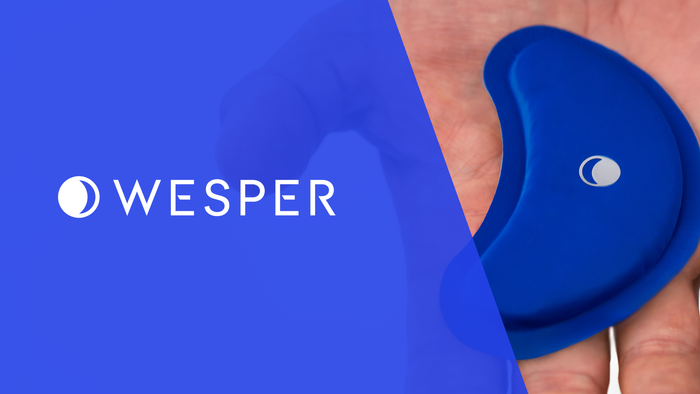
Multi-night testing comes standard with Wesper studies. The Wesper portal shows multi-night and longitudinal trends, including AHI at 3% and 4%, ODI and hypoxic burden, and gives clinicians full access to raw data for review. Wesper's FDA-cleared home sleep testing devices are indicated for adult use only. For more background, see Wesper's research post on night-to-night variability and Wesper for professionals.
Frequently asked questions
How many nights does a home sleep apnea test need to record?
The AASM guideline describes a single HSAT recording as conducted over at least one night.1
Should a negative home sleep apnea test be repeated?
The AASM guideline does not recommend repeating an HSAT after a negative, inconclusive or technically inadequate test. It recommends polysomnography instead.1
Does recording more nights reduce misclassification?
In a large under-mattress sensor study of a consumer sample, misdiagnosis error rates decreased as monitoring nights increased and remained stable after 14 nights.2 That study did not use PSG or HSAT.
Why can HSAT and PSG results disagree?
The AASM guideline names night-to-night variability and inconsistent definitions of respiratory events, such as hypopneas, as sources of discordance between HSAT and PSG.1
Can an HSAT be used to evaluate treatment?
Yes. The AASM position statement says an HSAT must be ordered by a medical provider to diagnose OSA or evaluate treatment efficacy.4
To see how multi-night studies and longitudinal trends work on one platform, visit Wesper's page on home sleep testing for clinics.
This article is for general education and is not medical advice. Talk with a licensed medical provider about your symptoms and testing options.
Sources
- Kapur VK, Auckley DH, Chowdhuri S, Kuhlmann DC, Mehra R, Ramar K, Harrod CG. Clinical practice guideline for diagnostic testing for adult obstructive sleep apnea: an American Academy of Sleep Medicine clinical practice guideline. J Clin Sleep Med. 2017;13(3):479-504. aasm.org
- Lechat B, Naik G, Reynolds A, et al. Multinight prevalence, variability, and diagnostic misclassification of obstructive sleep apnea. Am J Respir Crit Care Med. 2022;205(5):563-569. doi:10.1164/rccm.202107-1761OC doi.org
- American Academy of Sleep Medicine. Quality Measure #277: Sleep apnea severity assessment at initial diagnosis. Version 9.0, December 2024. aasm.org
- Rosen IM, Kirsch DB, Carden KA, et al. Clinical use of a home sleep apnea test: an updated American Academy of Sleep Medicine position statement. J Clin Sleep Med. 2018;14(12):2075-2077. aasm.org
This article is for general information and is not medical advice. Talk to a healthcare provider about your sleep health.