What does my Epworth Sleepiness Scale score mean?
Your Epworth Sleepiness Scale (ESS) score shows how likely you are to doze off during everyday activities. Scores range from 0 to 24, and scores of 11 or higher point to excessive daytime sleepiness. The ESS cannot diagnose sleep apnea by itself, but it helps your medical provider decide whether you need a sleep test.
What is the Epworth Sleepiness Scale?
The Epworth Sleepiness Scale (ESS) is a short questionnaire about how easily you fall asleep during the day. You answer it yourself. It has 8 questions, and each one describes an everyday situation.1
Dr. Murray Johns first developed the ESS for adults in 1990 and modified it slightly in 1997.1 It is copyrighted, and its author requires a license to use it, so the questions are not reprinted here.1 Your medical provider's office can give you the official version.
How is the Epworth score calculated?
You rate each of the 8 situations on a scale from 0 to 3, based on your usual chance of dozing off or falling asleep in that situation.1
Your total score is the sum of the 8 answers. That means it can range from 0 to 24.1 A higher number means you are more likely to fall asleep during the day when you don't mean to.
What do Epworth scores mean?
The official ESS website groups scores into five ranges.1 Scores from 11 to 24 show increasing levels of excessive daytime sleepiness.1
| ESS score | What it means |
|---|---|
| 0 to 5 | Lower normal daytime sleepiness |
| 6 to 10 | Higher normal daytime sleepiness |
| 11 to 12 | Mild excessive daytime sleepiness |
| 13 to 15 | Moderate excessive daytime sleepiness |
| 16 to 24 | Severe excessive daytime sleepiness |
Your provider looks at your score together with your symptoms and health history. The ESS author also notes that people filling out the questionnaire should not be given an interpretation of their score while they answer it.1 If you have questions about your number, ask your provider.
Does a high Epworth score mean I have sleep apnea?
A high Epworth score does not tell you whether you have sleep apnea. The official ESS website says the ESS is not a diagnostic tool by itself.1 The score also cannot show what happens to your breathing at night.
Sleep doctors agree on this point. The American Academy of Sleep Medicine (AASM) recommends that questionnaires not be used to diagnose obstructive sleep apnea in adults without a sleep study, either an in-lab study or a home sleep apnea test.2 The AASM also states that only a medical provider can diagnose a condition like sleep apnea.3
Your provider may also use other questionnaires, such as STOP-Bang, which estimates your risk of obstructive sleep apnea. The same rule applies to those tools: a questionnaire can point to a need for testing, and the sleep study makes the diagnosis.2 You can read more in whether the STOP-Bang questionnaire can diagnose sleep apnea.
What happens after my provider reviews my score?
Your provider uses your score as one part of a full sleep evaluation. If your symptoms suggest sleep apnea, they may order a sleep test. A home sleep apnea test must be ordered by a medical provider, based on your medical history and a face-to-face visit, in person or by video.3
A home sleep apnea test lets you sleep at home while wearing equipment that records how you breathe. You usually set it up yourself, and a member of the sleep team shows you how.4 You can read more in how a home sleep study works and what a home sleep study costs.
Your sleepiness can matter after testing, too. Medicare covers CPAP for people with an AHI or RDI of 5 to 14 events per hour when they also have documented symptoms such as excessive daytime sleepiness, among other listed conditions.5 Our guide on how to read your sleep study results explains those numbers.
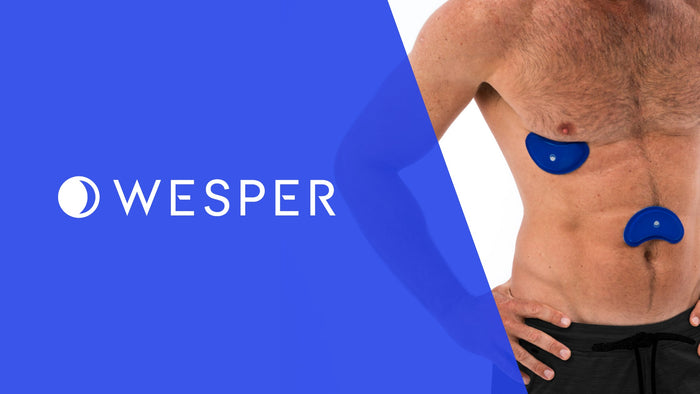
Wesper makes FDA-cleared home sleep testing devices that your provider can order. Multi-night testing comes standard with Wesper studies. Wesper tests are for adults only.
Frequently asked questions
What is a normal Epworth Sleepiness Scale score?
Scores from 0 to 10 fall in the normal range of daytime sleepiness, according to the official ESS website.
What Epworth score means excessive daytime sleepiness?
A score of 11 or higher points to excessive daytime sleepiness. Higher scores within the 11 to 24 range mean more severe sleepiness.
Can the Epworth Sleepiness Scale diagnose sleep apnea?
No. The ESS is not a diagnostic tool by itself. Sleep apnea is diagnosed with a sleep study ordered and reviewed by a medical provider.
Who looks at my Epworth score?
Your medical provider reviews your score along with your symptoms and health history. They decide whether you need a sleep test.
Do I need a doctor's order for a home sleep apnea test?
Yes. A home sleep apnea test must be ordered by a medical provider after reviewing your history and examining you, in person or by video.
Talk with your doctor or sleep provider about your score and your symptoms. They can tell you whether a sleep test makes sense for you and which kind.
This article is for general education and is not medical advice. Talk with a licensed medical provider about your symptoms and testing options.
Sources
- Johns MW. About the ESS: Epworth Sleepiness Scale scoring and interpretation. Official Epworth Sleepiness Scale website. epworthsleepinessscale.com
- Kapur VK, Auckley DH, Chowdhuri S, et al. Clinical practice guideline for diagnostic testing for adult obstructive sleep apnea: an American Academy of Sleep Medicine clinical practice guideline. J Clin Sleep Med. 2017;13(3):479-504. aasm.org
- Rosen IM, Kirsch DB, Carden KA, et al. Clinical use of a home sleep apnea test: an updated American Academy of Sleep Medicine position statement. J Clin Sleep Med. 2018;14(12):2075-2077. aasm.org
- American Academy of Sleep Medicine. Home sleep apnea test. Sleep Education. sleepeducation.org
- Centers for Medicare & Medicaid Services. National Coverage Determination 240.4: Continuous Positive Airway Pressure (CPAP) Therapy for Obstructive Sleep Apnea (OSA). cms.gov
This article is for general information and is not medical advice. Talk to a healthcare provider about your sleep health.