What Sleep Apnea Does To The Body

50 to 70 million adults.
That’s the estimated number of people in the US with a sleep disorder.
Among the sleep disorders, sleep apnea is one of the most common, and it affects the body in many ways.
Despite how common it is, sleep apnea’s effects on the body are not widely discussed. This article explains how sleep apnea can affect the body.

What is Sleep Apnea?
When you are asleep, you breathe in air that flows from the mouth and nose into the lungs.
However, in the case of sleep apnea, regular breathing is interrupted, stopping and starting throughout the night, which can carry health risks.
Sleep apnea is an umbrella term with numerous different specific types, the most common types of sleep apnea being:
- Obstructive sleep apnea
- Central sleep apnea
- Mixed or complex sleep apnea syndrome
Obstructive sleep apnea, the most common type, is caused when the upper airway is blocked.
This reduces airflow or, often, halts it completely.
The muscles in your mouth are contracted when you’re awake, to hold up the structure of the mouth and throat to allow for air to pass.
However, when you’re asleep, these muscles relax and the soft tissue can obstruct breathing.
The airway becomes narrow, causing loud snoring, or is blocked completely, jolting the individual awake gasping for breath.
Sleep apnea is a serious disorder and requires the right treatment.

Central sleep apnea occurs when the brain fails to send a signal to the muscles to take in air. This usually happens as a side effect of some other medical condition.
Mixed or complex sleep apnea is a sleep disorder that combines both central sleep apnea and obstructive sleep apnea, at different points in the night, or as a result of using a continuous positive airway pressure (CPAP) machine.
What effect does sleep have on the body?
Before we get into sleep apnea’s effect on the body, we first have to address sleep’s effect on the body.
The average person sleeps for a third of their life. Sleep is essential for humans, and ensuring you get enough high quality sleep every night is one of the pillars of health and performance.
According to the CDC, not getting enough sleep regularly is linked to a number of serious medical conditions like obesity, heart disease, and depression.
When it comes to getting enough sleep, it’s not just the duration of your sleep, it’s also the quality.
The quality of your sleep is defined by:
- The amount of times you wake up in the night
- How long it takes you to fall back asleep if you wake up
- How quickly you fall asleep
- Asleep at least 85% of the time
If you sleep throughout the night easily, your body is able to move through the different stages of the sleep cycle, both rapid eye movement (REM) and non-rapid eye movement (NREM)/deep sleep.
It’s safe to say that sleep is important, and should be a point of focus when striving for good health and mental wellbeing.
However, getting a good night’s sleep isn’t always straightforward.
What effect does sleep apnea have on the body?
Sleep apnea is characterized by interrupted sleep due to apneic events during the night in which air is blocked.
Someone with sleep apnea has at least five events like this per hour of sleep.
Those with severe sleep apnea may experience 30 or more apneic events per hour of sleep.
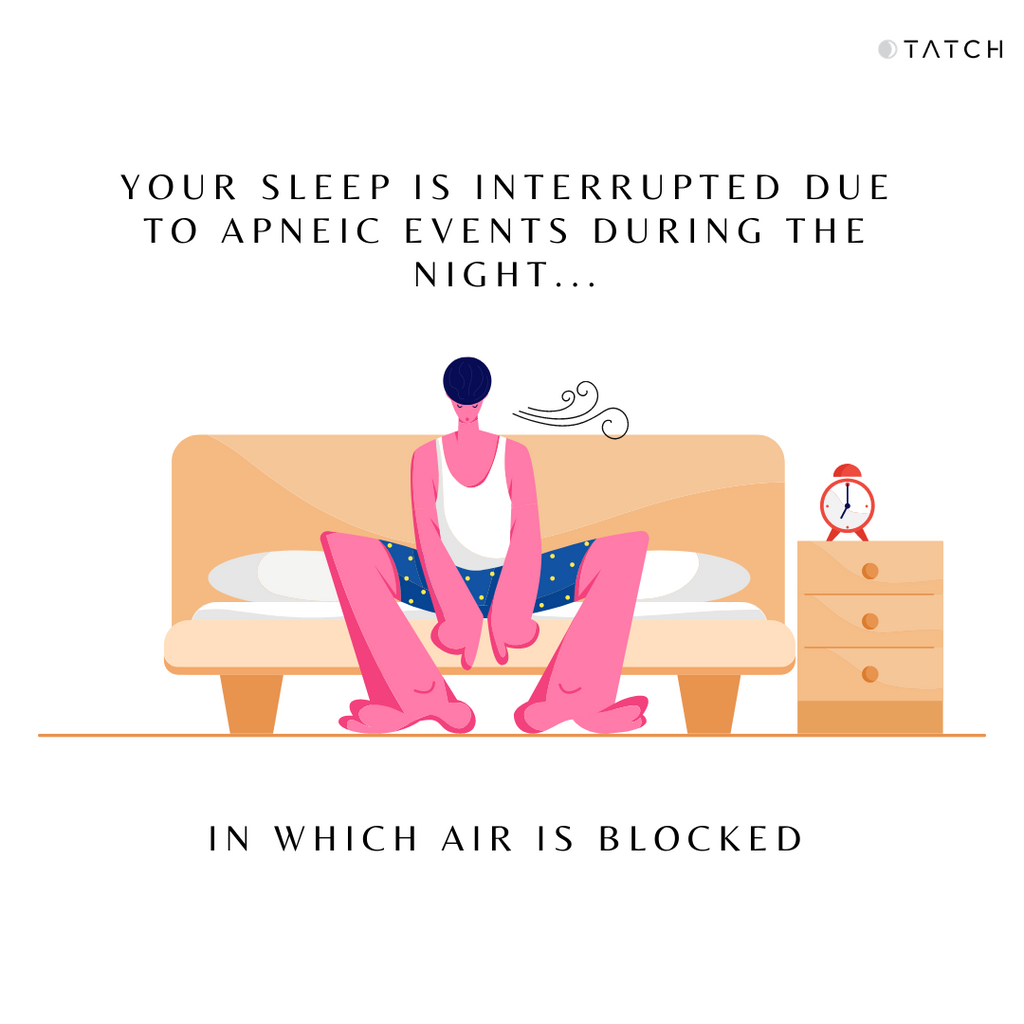
This can reduce the quality of your sleep.
This has a short and long term effect on the body.
That is why sleep apnea-driven sleep deprivation is associated with:
- Decline in cognitive function
- Higher risk of chronic disease
- Increased body weight and risk of obesity
- Higher risk of mental health issues like depression
- Brain fog
- High blood pressure
- Hormonal imbalances
- Persistent tiredness

Let’s get into some more detail of these effects now.
Mental health issues
Sleep quality is closely linked to mental health. Studies show that sleep deprivation can worsen or trigger a decline in mental health, increasing your risk of certain conditions like depression or anxiety.
The relationship also runs the other way: depression increases the risk of sleep disorders, which shows how closely they are linked.
A study found that 83 percent of depressed patients experienced at least one sleep disorder.
Sleep apnea, a common sleep disorder, can affect your mental health if untreated by preventing your brain from repairing and processing emotional information during sleep.

High blood pressure
High blood pressure is common in people with sleep apnea. Restricted breathing causes a decline in oxygen levels, which prompts the brain to signal the body to increase blood flow to transport more oxygen. However, elevated blood pressure has a knock-on effect: it increases your risk of heart disease and stroke.
If you have sleep apnea, talk with your doctor about checking your blood pressure regularly and about dietary changes that may help lower it.

Social and relationship issues
Sleep apnea often causes snoring, which can affect not only your quality of sleep but also your partner’s. You both can be affected by this. According to one study, lack of sleep increases the risk of conflict between spouses.
Sleep apnea is also associated with reduced sexual desire. This may show up as sexual dysfunction or an aversion to physical touch. A 2009 study found that 69 percent of men with obstructive sleep apnea experienced erectile dysfunction. This may be due in part to hormonal imbalance, covered below, and to fatigue from lack of sleep.

Hormonal imbalance
If untreated, sleep apnea can increase the levels of stress hormones, according to a 2017 study. As mentioned, it can also affect production of sex hormones in both men and women. This may affect fertility. One study reported by Reuters found women with sleep problems three times more likely to experience infertility.
Weakened immune system
Poor sleep quality is connected to reduced immune function. During the deep stages of sleep, your immune system is highly active: inflammatory cytokines are produced to help repair muscle damage, support innate and adaptive immunity, and fight off infection. When sleep is interrupted, these immune processes may be reduced.

Overweight and obesity
Overweight and obesity are among the main risk factors for sleep apnea, and the two can create a vicious cycle.
Lack of sleep is associated with overeating and snacking, while obesity can worsen sleep apnea.
A study with nearly 28,000 participants found that those with the least sleep ate more total calories, ate more frequently and ate more so in the evening time. Another study found that if you’re obese, you’re twice as likely to have sleep apnea.
A timeline of effects
If sleep apnea isn’t treated, it can contribute to health problems over time, affecting both your mental health and your body.
Treatment can reduce these risks.
It is impossible to say whether your sleep apnea will cause a particular side effect, or how soon.
But if you take the steps to improve what you can change (diet, activity levels, and sleep apnea treatment recommended by your provider), you may reduce your risk.
If you snore, wake up gasping, or feel tired despite enough sleep, talk with your doctor or sleep provider about home sleep testing. Wesper develops FDA-cleared home sleep testing medical devices used by clinicians, and a medical provider orders the test. Providers can learn more on the Wesper provider page.

This article is for general information and is not medical advice. Talk to a healthcare provider about your sleep health.