Comparing CPAP-Reported AHI With Wesper Home Sleep Test Results
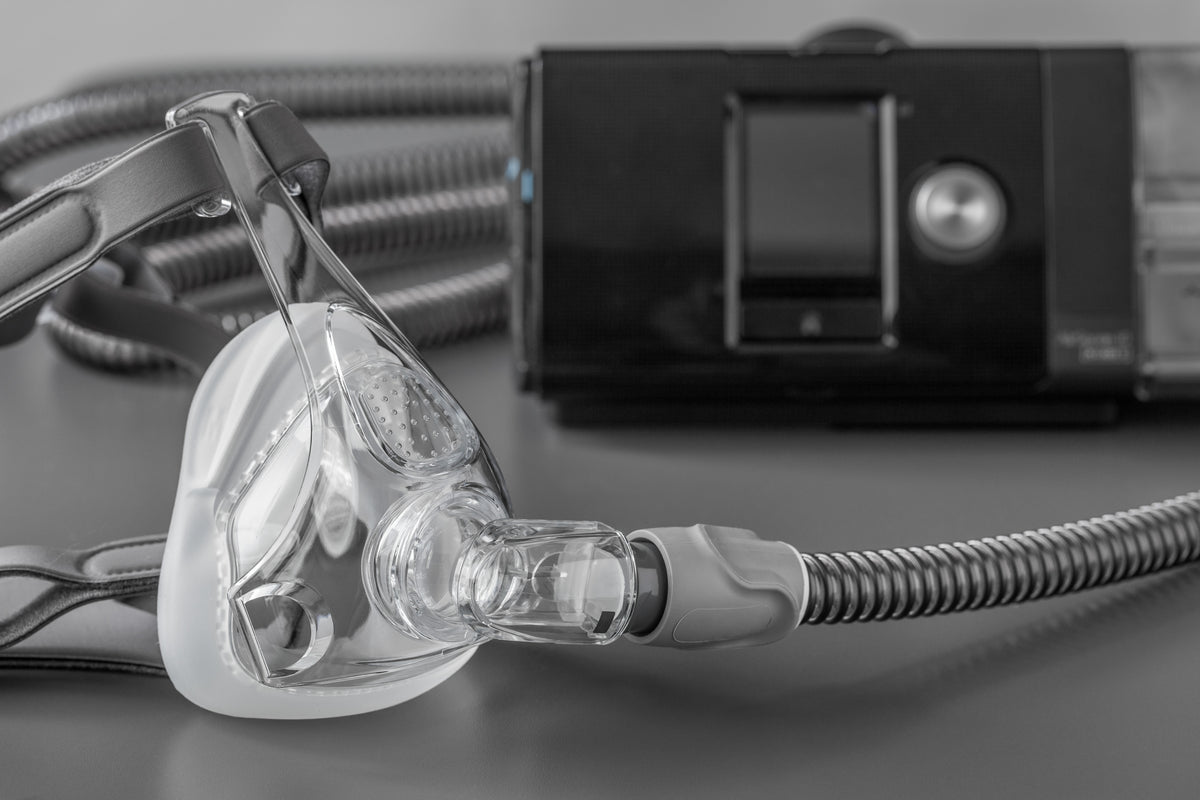
Positive airway pressure (PAP) therapy is a first-line treatment for obstructive sleep apnea (OSA) and is highly effective when used appropriately. PAP machines also detect respiratory events and calculate the apnea/hypopnea index (AHI), and few studies have evaluated the accuracy of that detection. This analysis compares the AHI reported by PAP machines with the AHI reported by Wesper Home Sleep Apnea Testing (HSAT).
Five individuals who used both PAP machines and Wesper HSAT volunteered to share their data. In 96% of tests, the AHI reported by the PAP machine was lower than the AHI reported by Wesper HSAT. In a majority of tests, the PAP machine reported a normal AHI while Wesper HSAT showed persistent sleep apnea.
These findings suggest that PAP readouts alone may not show persistent sleep apnea in some patients. Wesper HSAT supports longitudinal data collection, so clinicians can use it alongside PAP data to follow therapy response over time.

Figure 1: The majority of tests showed at least a 5 point difference in PAP-reported AHI vs. Wesper-reported AHI

Five individuals who used both PAP machines and Wesper HSAT volunteered to share their data. In 96% of tests, the AHI reported by the PAP machine was lower than the AHI reported by Wesper HSAT. In a majority of tests, the PAP machine reported a normal AHI while Wesper HSAT showed persistent sleep apnea.
These findings suggest that PAP readouts alone may not show persistent sleep apnea in some patients. Wesper HSAT supports longitudinal data collection, so clinicians can use it alongside PAP data to follow therapy response over time.
Background
Sleep apnea is a common sleep disorder in the United States. The most prescribed therapy for sleep apnea is positive airway pressure (PAP) therapy, which reduces obstructive breathing events by delivering pressurized air into the upper airways though a hose and masks. PAP therapy is considered a first line treatment because it has high success when used appropriately.
Most modern PAP machines contain an internal computer that collects data about the patient such as how frequently they use their device, how long they use their device, if there are any leaks, and how often they remove their mask. The PAP machine also detects respiratory events and calculates the apnea/hypopnea index (AHI) to determine how well it’s improving the patient’s sleep apnea.
PAP machines detect breathing events by analyzing measurements of airflow, vibration, and airflow profile flattening. Event detection is also used by autotirating (APAP) machines to regulate changes in delivered pressure [1]. PAP machines are not able to detect SPO2, and therefore cannot calculate desaturation events.
Sleep physicians rely on the PAP data to assess if the device is successfully improving their patient’s sleep apnea. Health insurers and medicare typically use the data to determine if they should continue covering the therapy. More recently, patients have also gained access to their data though mobile apps and open source programs, like OSCAR.
To date, few clinical studies have evaluated the accuracy of PAP machines for detecting breathing events and calculating AHI. Recent studies comparing PAP device detection to polysomnography (PSG) showed some agreement, however PAP machines tended to overestimate the AHI at low AHI values and underestimate the AHI at higher AHI values [1]. A recent 2022 longitudinal study found substantial differences between manual and automated event estimates during PAP therapy, and events were commonly underestimated. Factors associated with inaccuracy included sex, air leaks, and the amount of unstable breathing during [2].
Nearly all studies evaluating event detection by PAP machines have compared the collected PAP data to a manually scored, concurrent PSG. Home sleep tests (HST) offer a way to assess PAP accuracy outside the lab.
Wesper Lab is a home sleep test that is capable of multi-night, longitudinal testing. Wesper Lab measures respiratory effort, airflow and SPO2. Wesper devices show over 95% AHI correlation to in-lab PSG (Sleep Medicine 2025; JCSM 2023). Repeat testing allows for extensive comparison between Wesper data and PAP data, in users currently using a machine for sleep apnea therapy.
Using Wesper to Assess PAP Respiratory Event Detection Accuracy
To better understand the accuracy of PAP machines for detecting respiratory events, data was collected from PAP devices of Wesper users who volunteered to share their data. Five users participated in the study and a total of 29 Wesper tests and PAP reports were compared. Only tests with consistency between PAP use time and Wesper use time were included. Any tests that showed PAP-reported dysfunction, such as air leaks or excessive mask removed, were excluded from analysis.
Findings
In this analysis, the AHI reported by PAP machines was lower than the AHI reported by Wesper in 96% of tests. In 62.5% of tests, PAP reported an AHI at least 5 points lower than Wesper (Figure 1). The average point difference between PAP reported AHI and Wesper reported AHI was 5.5. The average reported PAP AHI was 1.8 and the average reported Wesper AHI was 7.2 (Figure 2).
Figure 1: The majority of tests showed at least a 5 point difference in PAP-reported AHI vs. Wesper-reported AHI

Figure 2: Average reported PAP AHI and Wesper reported AHI.
In many cases, PAP indicated an AHI within the normal range (AHI <5), while Wesper showed a mild (AHI: 5-14.9) to moderate (AHI: 15-29.9) AHI, indicating persistent sleep apnea (Figures 3-5). The percentage of tests where PAP showed a normal AHI and Wesper showed an abnormal AHI was 75%.

Figure 3: An example of a single individual’s PAP reported AHI and Wesper reported AHI.

Figure 4: A second example of a single individual’s PAP reported AHI and Wesper reported AHI.
Figure 5: A third example of a single individual’s PAP reported AHI and Wesper reported AHI.
Conclusion
In this analysis, the AHI reported by PAP machines was lower than the AHI reported by Wesper in most tests. In the majority of tests, the PAP machine reported a normal AHI while Wesper showed persistent sleep apnea.
Relying on PAP readouts alone may mean persistent sleep apnea is not recognized by sleep physicians and patients. Patients may also not report continuing sleep apnea symptoms if their machines report their breathing is normal.
Sleep care providers may consider supplementing PAP readouts with home sleep testing to evaluate long-term PAP therapy response. Wesper Lab supports multi-night and longitudinal testing.
Limitations
This analysis included five users and a small number of tests, so the findings are preliminary.
References
-
Berry RB, Kushida CA, Kryger MH, Soto-Calderon H, Staley B, Kuna ST. Respiratory event detection by a positive airway pressure device. Sleep. 2012 Mar 1;35(3):361-7. doi: 10.5665/sleep.1696. PMID: 22379242; PMCID: PMC3274337.
-
Ni YN, Thomas RJ. A longitudinal study of the accuracy of positive airway pressure therapy machine-detected apnea-hypopnea events. J Clin Sleep Med. 2022 Apr 1;18(4):1121-1134. doi: 10.5664/jcsm.9814. PMID: 34886948; PMCID: PMC8974380.
This article is for general information and is not medical advice. Talk to a healthcare provider about your sleep health.